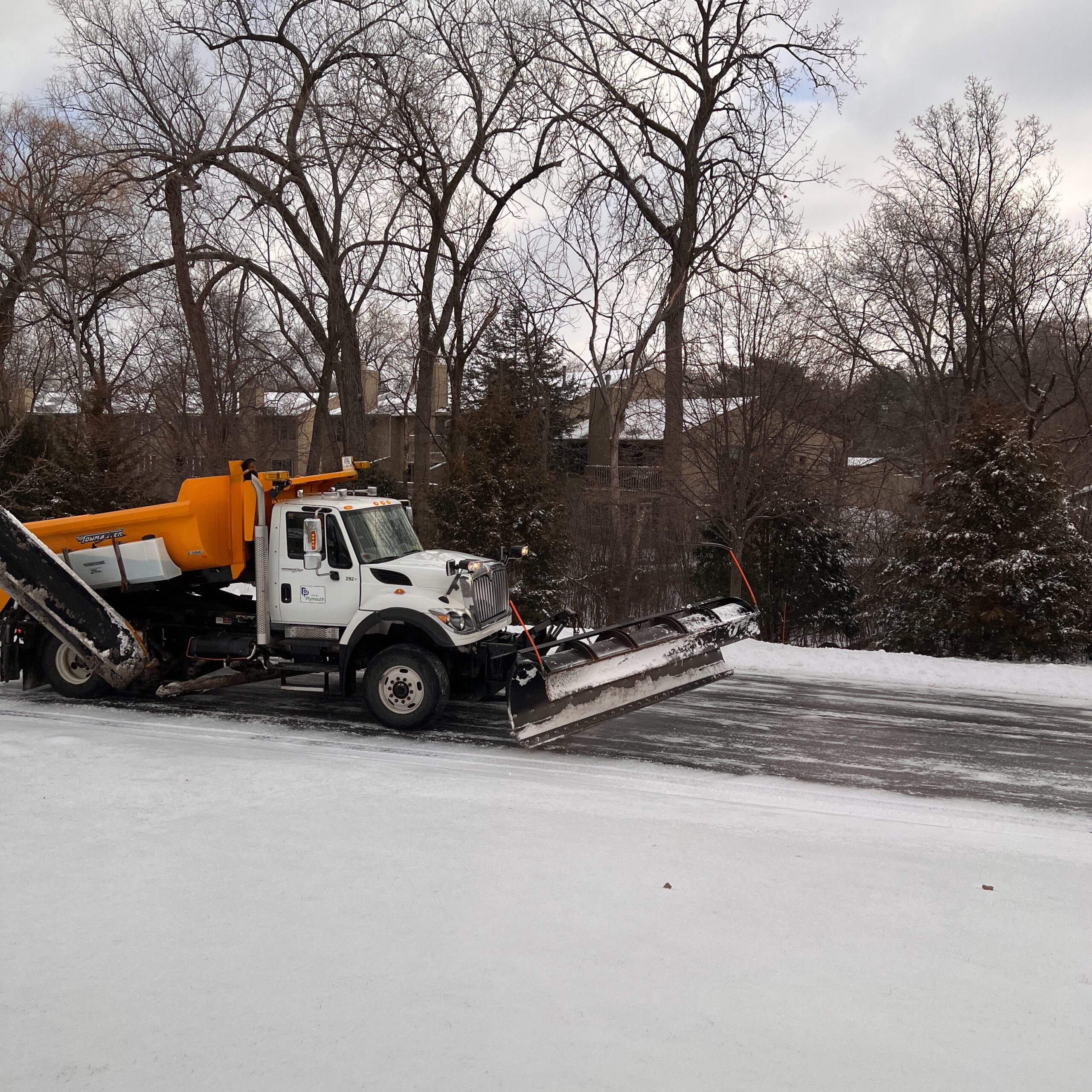
As winter approaches, commercial building owners often face the challenge of protecting their driveways and parking lots from the harsh conditions brought by snow plows. Snow plow damage can cause significant wear and tear on your asphalt, leading to cracks, potholes, and costly repairs. Fortunately, sealcoating is an effective solution to safeguard your driveway from snow plow damage. In this blog post, we will explore how sealcoating acts as a protective barrier and preserves the longevity of your driveway throughout the winter season.
- Understanding the Impact of Snow Plow Damage: Before delving into the benefits of sealcoating, it’s important to grasp the potential damage caused by snow plows. The weight and force exerted by snow plows can result in several detrimental effects on your driveway, such as:
a. Surface Abrasion: The steel blades of snow plows can scrape away the top layer of asphalt, causing visible abrasion marks and gradually wearing down the surface.
b. Cracks and Potholes: Constant exposure to snow plow blades can lead to cracks in the asphalt, allowing water and ice to seep in. Over time, this can result in the formation of potholes and further deterioration.
c. Salt and Chemicals: Snow plows often distribute deicing salts and chemicals, which can accelerate the deterioration of your driveway’s asphalt, leading to structural damage.
- The Protective Benefits of Sealcoating: Sealcoating, a preventive maintenance technique, provides a protective layer that shields your driveway from snow plow damage. Here are the key benefits of sealcoating in snow plow protection:
a. Barrier against Abrasion: The sealcoating material acts as a barrier between the blades of snow plows and your driveway’s asphalt surface. It prevents direct contact, reducing the risk of surface abrasion and preserving the smooth appearance of your driveway.
b. Waterproofing: Sealcoating fills small cracks and voids on the asphalt surface, preventing water and moisture from seeping into the pavement. By keeping the asphalt properly sealed and waterproofed, it minimizes the chances of freeze-thaw cycles that cause cracks and potholes during winter.
c. Chemical Resistance: Sealcoating creates a protective shield that safeguards your driveway against the corrosive effects of deicing salts and chemicals used by snow plows. This helps to maintain the integrity of the asphalt, preventing premature deterioration.
d. UV Protection: Sealcoating shields your driveway from the damaging ultraviolet (UV) rays of the sun. As snow plow damage weakens the surface, UV rays can accelerate the degradation process. Sealcoating acts as a sunscreen, extending the lifespan of your driveway.
- Professional Sealcoating Process: To ensure optimal snow plow protection, it’s essential to hire a professional sealcoating company. Here’s an overview of the sealcoating process they typically follow:
a. Preparation: The surface is thoroughly cleaned to remove dirt, debris, and vegetation. Cracks and potholes are filled with asphalt patching material.
b. Application: A high-quality sealcoat is applied using professional equipment, ensuring an even and consistent coverage. This process fills voids, seals the surface, and enhances the appearance of your driveway.
c. Drying and Curing: The sealcoat needs time to dry and cure properly. This ensures that it forms a durable protective layer before facing snow plow damage and winter weather conditions.
Conclusion: Sealcoating plays a vital role in protecting your driveway and lot from snow plow damage. By acting as a barrier against abrasion, waterproofing the surface, resisting chemicals, and providing UV protection, sealcoating preserves the integrity of your driveway throughout the winter season.